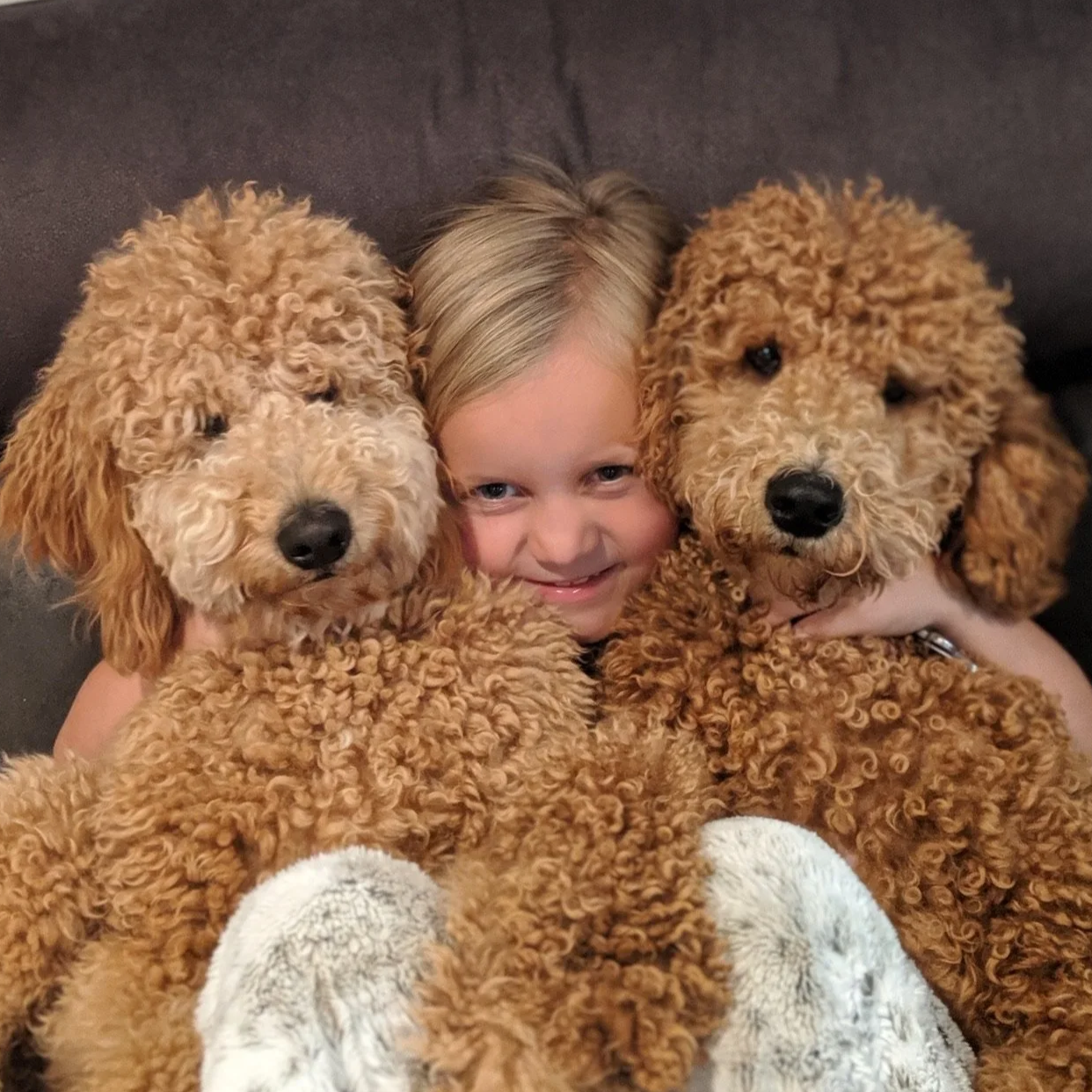
Goldendoodle & Bernedoodle Puppy FAQs
Guidance From an Experienced, Ethical Breeder
At Northridge Doodles, we believe families deserve accurate information, realistic expectations, and lifelong support—not exaggerated promises. The answers below reflect how we raise our puppies, how we select our parent dogs, and what we’ve learned through years of hands‑on experience.
-
No dog is completely hypoallergenic, including Goldendoodles and Bernedoodles. We’re always transparent about this. Allergies are typically triggered by dander and saliva proteins, not hair alone.
Many Goldendoodles and Bernedoodles are low shedding and lower dander, especially those with curlier, Poodle‑influenced coats. That’s why these breeds often work well for families with mild allergies, but individual reactions can vary. We never make “allergy‑free” guarantees and encourage allergy‑sensitive families to make informed decisions.
Our experience: coat type, grooming habits, and individual sensitivity matter far more than breed name.
-
Description text goes hereAdult size depends on the size of the parents, genetics, and growth patterns. Based on our program and historical litters, typical adult ranges are:
Goldendoodles
Mini: approximately 25-35 lbs
Standard: approximately 50–90 lbs
Bernedoodles
Mini: approximately 25–40 lbs
Standard: approximately 50–90+ lbs
We use parent measurements, past litters, and growth tracking to provide the most accurate estimates possible, but no ethical breeder can guarantee an exact adult weight.
-
Description text goes hereShedding varies by coat type:
Curly coats: very low shedding
Wavy coats: low shedding
Straighter coats: mild to moderate shedding
Most of our puppies are bred for low shedding coats, but we are upfront that no dog is completely non‑shedding. Consistent brushing and professional grooming play a major role in overall coat maintenance.
-
Item descriptionBoth breeds are known for their intelligence, affectionate nature, and strong bond with their families, but they often express those traits differently.
Bernedoodles tend to be:
Social and outgoing
Playful and energetic
Quick learners who love interaction
Goldendoodles tend to be:
Slightly calmer and more observant
Emotionally intuitive
Gentle and deeply family‑oriented
Temperament is shaped by genetics, early handling, and environment, which is why we focus so heavily on early socialization and individual puppy personality.
-
Item descriptionDoodle coats require regular grooming to stay healthy, comfortable, and mat‑free.
Expect:
Weekly brushing at home
Professional grooming every 4–8 weeks depend on desired look
We begin gentle handling and grooming exposure early so puppies leave us confident, calm, and prepared for lifelong coat care.
-
Responsible breeding is both time‑intensive and costly. Our pricing reflects the care and expertise behind each puppy, including:
Health‑tested parent dogs
Regular veterinary care and vaccinations
Early neurological stimulation and socialization
Puppies raised in our home—not kennels
A health guarantee and ongoing breeder support
We prioritize quality, health, and temperament over volume or speed.
-
Yes—when responsibly bred and properly trained, Goldendoodles and Bernedoodles make exceptional family companions.
They are typically:
Gentle with children
Loving and loyal
Social and people‑focused
We raise our puppies in a family environment to support confident, well‑adjusted temperaments.
-
These dogs enjoy being active but are not typically hyper.
Most thrive with:
Daily walks
Playtime
Mental stimulation through training or enrichment
Balanced routines help support good behavior and emotional well‑being.
-
Yes, especially mini and micro-mini sizes. As long as daily exercise and mental stimulation needs are met, these breeds can adapt very well to apartment or smaller living spaces. A yard is helpful, but not required.
-
Yes. Thanks to their Poodle heritage, both breeds are highly intelligent and responsive to training.
They do best with:
Positive reinforcement
Consistent routines
Early structure and guidance
We start puppies with foundational habits to support a smoother transition into their new homes.
-
They can, especially if independence is never introduced. These dogs form strong bonds with their families.
We encourage:
Proper crate training
Regular alone time
Predictable routines
These practices help prevent anxiety and build confidence.
-
Yes. Many first‑time dog owners do extremely well with Goldendoodles and Bernedoodles due to their forgiving, affectionate nature and their mild energy expenditure needs.
-
With early socialization, both breeds generally do very well with other dogs and household pets, including cats.
-
Goldendoodles and Bernedoodles are generally healthy but can be predisposed to conditions such as:
Hip or joint issues
Eye conditions
Allergies or sensitivities
This is why responsible breeding, health testing, and proper puppy care are essential.
-
Average lifespan:
Goldendoodles: approximately 10–15 years
Bernedoodles: approximately 10-12 years
Good genetics, nutrition, and veterinary care make a significant difference in longevity.
-
Ethical breeders health test their parent dogs, which may include:
Hip and elbow evaluations from OFA or PennHip
Eye, cardiac, and patella exams
Genetic testing panels
Healthy puppies start with healthy parents.
-
Most coats fall into three categories:
Curly (lowest shedding, highest grooming needs)
Wavy (balanced maintenance and shedding)
Straighter (easier grooming, more shedding)
We help families choose based on lifestyle and care expectations, not just appearance.
-
Yes. Many puppies experience natural coat texture and color changes as they mature. Adult coats typically develop between 8–14 months, and lighter colors may fade over time. This is normal and expected.
-
Puppies grow rapidly during the first several months, then slow as they mature. Larger dogs take longer to fully fill out. We provide guidance on feeding and growth to support healthy development.